Quite a number of Africans look back at the Kwame Nkrumah era of pan-Africanist freedom fighters and their pursuit for African dignity, justice, poverty eradication and freedom as an era of achievement they would want to replicate.
Many us declare ourselves modern-day pan-Africanists. We classify ourselves so by being relevant in dealing with specific issues, rather than pursuing, like the Kwame Nkrumah’s, an approach whose elements were deliberately developed and widely shared.
Consequently, there doesn’t seem to be a shared pan-African approach but rather different individual and organisational way of doing things.
There are, for instance, many pan-Africanists in the world of non-governmental organisations. Their attire speaks to travel across the continent – African-fabric dressed notebooks and laptop covers, headscarves, shirts and dresses.
They work in the water, health, microenterprise, human rights, peacebuilding, education, humanitarian and environment spaces, with mission statements reflecting ideals such as ensuring justice and ending poverty.
Interestingly, these ideals are seen as separate and distinct from pan-Africanism. The agendas NGOs work on have few, if any, joint or collaborative approaches, even when working in the same geographical space.
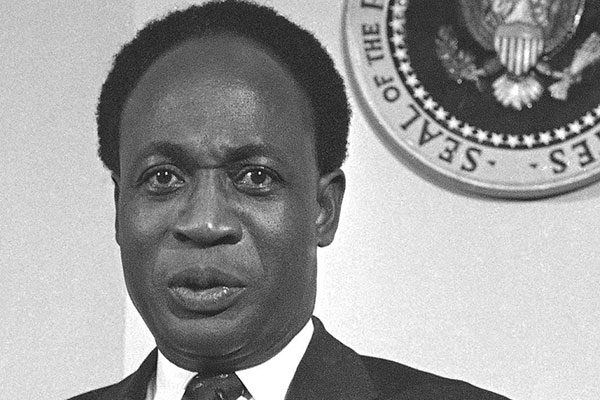
Ghana's first president Kwame Nkrumah talks to newsmen at the White House on March 8, 1961 after a conference with President Kennedy. Nkrumah was one of the early proponents of a united Africa. FILE PHOTO | NMG
Though often—particularly on social media —expressing African interrelatedness, the separateness of approach contributes to the hesitancy by NGOs to work together on pan-Africanist agendas. Being one of them, this has always troubled me.
Attempts at bridging this schism by, among others, the African Union and individuals like Pius Adesanmi—who died in the ET 302 Ethiopian Airline crash earlier this year—through introspection of focus has not quite permeated. A nascent discourse woven around what NGOs view as day-to-day work and pan-Africanism is yet to emerge.
This may be partly explained by the history of authoritarianism and violent conflict characterising political spaces in some parts of the continent, making dialogue on pan-Africanism virtually impossible. This in turn limited policy and jurisprudence constraining formulation of a coherent pan-African framework.
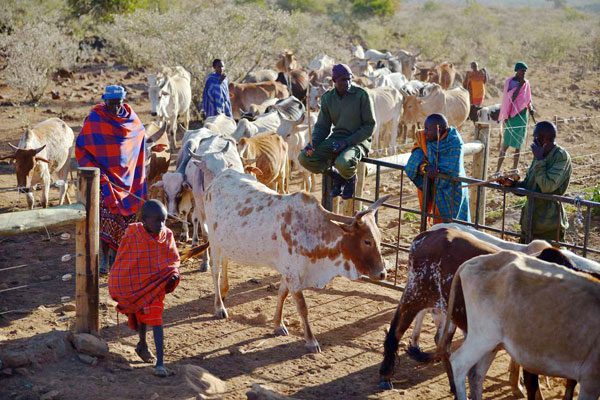
Many Africans, like the freedom fighter we visited, are defined by extreme poverty. Poverty is, without a doubt, the one condition that has the greatest adverse effects on the attainment of a life with the dignity pan-Africanists like Kwame Nkrumah—who like Mwalimu Nyerere, lived and died poor — fought for.
We present-day pan-Africanists should ponder the life of these founders, even as we show up in African villages with our ubiquitous bottles of mineral water.
A drive to end poverty—improving the living standards of the most needy and vulnerable groups should really necessitate a relook at what we could do together and be the pan-African calling of our day.
Both the NGOs and governments are critical in ensuring progressive and sustainable realization of pan-African ideals. Governments have legal obligations to end poverty. A pan-African framework to hold governments accountable on reduction of inequalities is necessary.
The framework would sensitise citizenry to ensure government’s legitimacy rests on the effective initiation and implementation of policies and programmes protecting citizens from debilitating effects of poverty.
The pan-Africanists we look up to were political leaders who did not amass wealth like some present-day capitalist political leaders. They showed by example that it was possible for poor people to challenge power.
Nobel Laureate Amartya Sen described desirable outcomes which “remove the various unfreedoms that stand in the way of living the kinds of lives that people have the reason to live.” One of this unfreedoms is the indignity poor people live in.
A deliberately developed and widely shared modern pan-African ideology on how to combine efforts to meaningfully provide opportunities, protections and guarantees to get Africans out of poverty, strengthen their roles in decision making and foster their influence is as necessary as unselfish pan-African leadership.
Without such effort, donning my Kente cloth, Nigerian Ankara and South African jewellery will not actualise my pan-Africanism.